Contemporary direct composite approaches for the restoration of tooth wear
Pathological tooth wear is increasing, making minimally invasive, adhesive restorations more relevant. This webinar presents freehand, IMT and Stamp techniques for rebuilding worn teeth, covering indications, materials, workflows, advantages, limits and expected longevity.
The number of patients presenting with tooth wear has increased dramatically over the past 15–20 years. When tooth wear becomes pathological, rehabilitation of the worn dentition is often required. In younger patients, a dynamic, minimally invasive, adhesive treatment concept is preferred, consisting of localised or generalised build-up of worn teeth using direct composite restorations.
Restoring the morphology and function of worn teeth with direct composite restorations remains a challenge for many clinicians. To be well prepared for an extensive rehabilitation, it is recommended that the practitioner carefully plans the restorative treatment using study models, intraoral and extraoral photographs, as well as a diagnostic wax-up and mock-up.
Several techniques are available to translate a diagnostic wax-up into aesthetic and functional composite restorations. A highly skilled dentist with a thorough understanding of tooth morphology may restore moderately worn teeth using freehand composite modelling.
More commonly, general dentists can rely on guided techniques such as the IMT technique or the Stamp technique, which allow for precise and predictable transfer of the diagnostic wax-up into aesthetic and functional composite restorations using a rigid transparent silicone index. The IMT technique utilizes a highly filled flowable composite, whereas the Stamp technique employs a conventional nanohybrid composite.
In this webinar, these three techniques for restoring tooth wear with direct composite restorations will be presented. For each technique, the indications, materials, clinical protocols, advantages and limitations, as well as the expected longevity of the restorations will be briefly discussed.
- Learning objective 1: Identify pathological tooth wear and determine when minimally invasive, adhesive rehabilitation is indicated.
- Learning objective 2: Perform structured treatment planning for worn dentitions using diagnostic wax-ups, mock-ups, and clinical documentation.
- Learning objective 3: Differentiate between freehand composite modelling, the IMT technique, and the Stamp technique, including their indications and limitations.
- Learning objective 4: Apply step-by-step clinical protocols to accurately translate a diagnostic wax-up into functional and aesthetic direct composite restorations.
- Learning objective 5: Select appropriate materials and techniques to achieve predictable outcomes and long-term success in the restoration of tooth wear.
Speakers
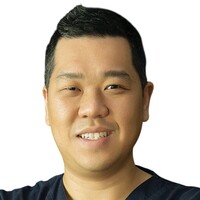
Dr. Anthony Mak B.D.S
More courses with Dr. Anthony MakDr Anthony Mak graduated with multiple awards from the University of Sydney in 2002. He then went on to complete his Post Graduate Diploma in Clinical Dentistry (Oral Implants).
Dr Mak is one of Australia’s most sought after speaker, especially in the field of digital and restorative dentistry. He has lectured extensively in Australia, New Zealand and across Asia; and his hands-on workshops have gained such popularity that they are almost always booked out soon after registrations open. He is also gaining great popularity on the European and US circuit.
Anthony is the author of two compelling compendiums detailing direct composite and indirect ceramic restorations, the clinical photography and documentations can only be described as exceptional. He has published numerous case studies and articles for local and international dental bodies and associations.
Anthony’s interest lies in dental technologies, advances in materials and techniques; and he has a unique understanding of CAD-CAM digital dentistry.
Anthony runs two practices in metropolitan Sydney, focusing on quality modern comprehensive care, including aesthetic and implant dentistry. He is also a clinical consultant and key opinion leader for several global dental companies focusing on development of new dental technologies.
Outside of clinical practice, Anthony also sits on the Restorative Advisory Board for GC Europe, the Executive planning committee for the Graduate Diploma in Implant Dentistry (Syd Uni), an executive committee member for the Dental Alumni of the University of Sydney, and is the team leader in Australia for the renown BioEmulation Group, a global group of high achieving dental practitioners.
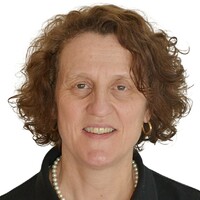
Prof. Marleen Peumans
More courses with Prof. Marleen PeumansMarleen Peumans was born on November 10, 1964, in Belgium. She obtained her degree in Dentistry in 1987 at the Catholic University of Leuven. Thereafter, she followed a 4-year post-graduate program at the Department of Operative Dentistry. She applied herself especially to the clinical use and the performance of anterior and posterior resin composites, bonded ceramic restorations, fibre-reinforced composite restorations and bleaching. She took part in numerous clinical studies concerning dentine adhesives, posterior composites, and ceramic veneers/inlays/onlays. In 1997 she obtained the degree of Doctor in Medical Sciences. From 2004 she became Professor at the Catholic University of Leuven. She has several national and international publications on her name concerning clinical performance of adhesive restorations and bleaching. She is a member of the Bio-Emulation team.